Journal / Craft
Craft - May 12, 2026
Why Cuisine Rules Exist (And When To Break Them)
By Mariana Estevez
Journal / Craft
By Mariana Estevez
A cuisine is, at its core, a set of constraints. Italian pasta water has a specific salinity that brings out wheat. Japanese dashi must be drawn at a specific temperature or the konbu turns slimy. Mexican masa is made with a specific lime that splits the corn open. When somebody says "you have to do it this way," what they really mean is that this technique solves a structural problem in a way nothing else does.
The trick is learning which rules are structural and which are stylistic. Adding cream to carbonara, for example, is not a tradition issue -- it is an emulsion issue. The classic technique uses pasta water and pecorino to make a sauce that coats the noodle uniformly. Cream covers up the failure mode of a broken egg sauce. If you have done it both ways, you can taste the difference: cream-carbonara is uniform but flat, while egg-yolk carbonara is glossy and tasted in waves.
So when you see a "shortcut" recipe, ask what structural job the original technique was doing. If the shortcut still does that job, take it. If it does not, the dish will eat differently, even if you cannot quite say how.

They both come out of a pot of bones and water, but stock and broth want different things. Knowing which one a recipe needs is half the battle.
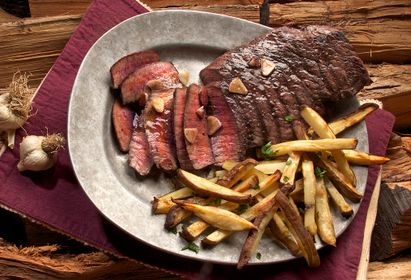
Samin Nosrats famous four have entered the language of cooking. There is a fifth element that most home cooks miss: context. A dish reads differently depending on what you ate before it.
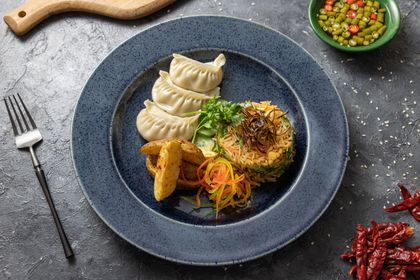
Rice is the worlds most common starch, and every cuisine treats it like its own. A week of rice meals is a map of how cooks solve the same problem differently.
